Showing posts with label Persuasive Speech. Show all posts

Saturday, August 15, 2015

How to Make a Handout

Making Handouts

Have you ever created a handout at the last minute before teaching a session? We often hastily prepare them without considering what elements make them most effective, but a first-rate handout can make a successful session even better.

Why should you make handouts?
Help students remember your presentation long after it is over.

Present information visually, which meets the needs of visual learners.

Allow students to concentrate on your presentation rather than trying to write down everything you say.

Provide students with a guide to help them with future research.

Give you something to refer back to when planning future sessions.

When should you create them?

Handouts should be created at the same time that you are planning your session. This ensures that the information you include will be tailored to that specific course. It's a good idea to make copies of your handouts ahead of time to avoid problems such as copier jams five minutes before your session begins.

When do you hand them out?
Opinions differ on when to pass out your handouts - some think it's best to give them out at the beginning or end of the session, and others prefer the point at which the information is most relevant. Just remember that your students will probably look at them right when they receive them and will miss whatever you say in the next several minutes.

What information should you include?

An outline of the key ideas in your presentation.

Specific information from your session to which your students will want to refer in the future.

Further information or a bibliography for further research.

Illustrations, charts, graphics, etc.

Make part of your handout an activity guide that provides directions, steps or a worksheet.

Remember, say no more than what is necessary - the urge to say too much can ruin a good handout.

What are some design tips?
Recommended Font Size for

Titles
14-16 point
Subtitles/subdivisions 12-14
Body 10-12

Set off distinct parts of the handout using italics, shading, bolding, boxed headlines or underlining.

Bullet lists to make them easier to scan and understand.

Leave at least a .75" margin on every side.

Try organizing information into a two-column format.

Serif fonts (such as Times New Roman) are more distinctive in print than sans serif fonts (such as Arial).

Use no more than three fonts in a single handout.

Make sure to leave plenty of white space to avoid confusion.

If you do have multiple handouts, make them distinguishable from each other by using multiple colors.

When you are done, look at your handout and ask yourself the following questions:
Does the information flow?

Is the handout visually appealing?

If a student were to forget everything you presented, would the information included in the handout help him/her recall the main ideas?

Is your contact information included?

Are helpful Websites or tips for finding additional information needed/included?

CLICK HERE TO READ MORE. Wallace, Marie. "Guide on the Side: Why and How to Avoid Trashy Handouts." LLRX.com May 1999. 10 Mar 2003.

Monday, May 18, 2009

Final Examination Speech Downloadable Tools

TOOLS TO ASSIST YOU IN YOUR WORK'S CITED PAGE

It is my advice to you that you create your work's cited page as you do your research. It will be easier to complete, it will provide you with a reference to the sources that you have used and it will be completed when you're finished researching your topic.

Hints:

(1) When you copy each entry into Word, make sure that you copy the entry in the gray box, not the copy in white below. They are labeled.
(2) Copy the entire entry, including the period at the end.
(3) When you paste, a small box will appear. Click on it and choose "text only."
(4) Make sure that you indent every line after the first. You have to tab these lines over to make them line up the right way.
(5) Sometimes you have to hit "enter" at the beginning of these lines and then tab over.

CLICK HERE to go directly to the Landmark Project's SON OF CITATION MACHINE. Please choose MLA in the upper left hand corner. Then choose the type of entry that you would like the machine to create.

CLICK HERE to go directly to the SON OF CITATION MACHINGE to create a WORK'S CITED entry for a web page.

PRE-FORMATTED MLA OUTLINE

CLICK HERE for a copy of a pre-formatted MLA Outline for the Persuasive speech.

FINAL EXAMINATION RUBRIC

Final Examination Speech Rubic page 1.doc

Final Examination Speech Rubic page 1.doc

Final Examination Speech Curriculum Draft page 3.doc

Monroe's Motivated Sequence Used to Persuade an Audience

Originally posted 11/14/2007

Monroe's motivated sequence is a technique for organizing persuasive speeches that inspire people to take action. It was developed in the mid-1930s by Alan H. Monroe. It consists of five steps:

Attention--Accomplished in the Introduction
Get the attention of your audience using a detailed story, shocking example, dramatic statistic, quotations, etc.

Need--Prove the Problem!
Show that the problem about which you are speaking exists, that it is significant, and that it won't go away by itself. Use statistics, examples, etc. Convince your audience that there is a need for action to be taken.

Satisfaction--Show What Others Plan on Doing or Have Done.
Show that this need can be satisfied. Provide specific solutions for the problem that the government and community can implement as a whole.

Visualization--Show Us What We Get
Tell the audience what will happen if the solution is implemented or does not take place. Be visual and detailed.

Action--Accomplished in the Clincher
Tell the audience what action they can take personally to solve the problem.
For Instance, a more generalized format may be;

Monroe’s Motivation Sequence

1. Attention: Hey! Listen to me, I have a PROBLEM!
2. Need: Let me EXPLAIN the problem.
3. Satisfaction: But, I have a SOLUTION!
4. Visualization: If we IMPLEMENT my solution, this is what will happen.
5. Action: You can help me in this specific way. Are YOU willing to help me?


The advantage of Motivated Sequence is that it emphasizes what the audience can do. Too often the audience feels like a situation is hopeless; Monroe's motivated sequence emphasizes the action the audience can take.

Persuasive Speech Ideas

Persuasive speech ideas, a list of 200+ ideas. I also help you to make a choice by finding specific angles of approach. Review the list of speech topics and ideas below. Make a personal short list by selecting three persuasive speech topics you perhaps could use. For now just make a rough inventory. Tickle your imagination, associate and be creative.

# Which of the speech topics are you interested in?
# Do you know something about?
# Would you like to research and persuade your audience about?

These speech topics can be turned into persuasive speech ideas for a public speaking topics assignment. Of course this persuasive speech topic list isn't exhaustive.

25 Free Persuasive Speech Topics

These free persuasive speech topics are for instant use or vary on them and write your own persuasion statement for public speaking or speech class purposes. Start with this sentence I want to persuade the audience that ... and than take one of the speech topics of my general list of persuasive speech sample topics, or select one out of the following 25 pre-fab instant free persuasive speech topics for public speaking:


1. The government should be persuaded to pay for all healthcare. By the way you can fill in other verbs and nouns in most of the free persuasive speech topics in this list. Just tweak.
2. Teachers are not safe in schools.
3. We are better off today than we were eight years ago.
4. We are killing the rainforest.
5. Children in ... fill in the nation of your choice ... are living better.
6. Continue the war on drugs by attacking the ingredients needed.
7. DNA databases jeopardize our privacy.
8. Vanity is not a valid reason for cosmetic plastic surgery.
9. The rich pay, don't pay enough taxes.
10. Return extra taxes collected to those who paid.
11. All MP3 music belong in the free public domain.
12. Needle exchange programs help to prevent.
13. Mothers should be persuaded to avoid fighting in militairy combat front lines.
14. Free speech don't include, include hate speech.
15. Spam e-mails should be, should not be outlawed.
16. We need a single food safety agency. Remember, replace the nouns and you can write easily other free persuasive speech topics.
17. Downloading copyrighted MP3s is not, is wrong.
18. Gay couples should be, should not be allowed to marry.
19. Higher energy prices is a sacrifice we have to make for cleaner fuels.
20. Home schooling provides a better education, is worse for your child.
21. Honesty, integrity and a persuasive mentality are the most important qualities of an elected official. Or vary on the qualities and create your own free persuasive speech topics on gouvernement, state or local politicians.
22. Zero tolerance is a useful instrument to prevent violence.
23. Babysitters younger than 16 years should be forbidden.
24. Human cloning is bad, is good.
25. Restrict every household to 60 gallon can on trash a week.

All persuasive speech topic statements above are not reflecting my personal opinion! These just are samples of free persuasive speech topics.

30+ Instant Persuasive Speech Topics for Free

Persuasive speech topics for free, this is a list with instant persuasive speech topic ideas for public speaking speech assignments. Example persuasive speech topics for free on various society issues:
  1. Gay marriage should be an issue for the states
  2. Flag burning should be prohibited.
  3. Military service should be based on conduct, not sexual orientation.
  4. Education, housing, and hiring must be equal for all.
  5. The Ten Commandments are inherent values in schools.
  6. The Patriot Act violates civil liberties.
  7. The 1st Amendment is not a shield for hate groups.
  8. Support affirmative action in governmental organisations.
  9. Limiting immigration is limiting opportunities.
  10. The police always should investigate all complaints of wife assault.
  11. The amount of spam you see in your mailbox is just the tip of the iceberg.
  12. Ban same-sex marriages.
  13. Academic dishonesty should always be santioned by termination of student status for a specified term.
  14. Wildcat strikes should be legalized.
  15. What you need to know to prevent serious complications with body piercings.
  16. Only buy energy efficient household appliances.
  17. Outsourcing is a good solution for small business owners.
  18. Every citizen should commit to 2,000 hours of voluntary national service in lifetime.
Persuasive speech topics for free on foreign policy and international issues:
  1. No-fly lists of airliners do have a lack of accuracy.
  2. Mankind is responsible for the large loss of biodiversity.
  3. We need an international forestry agency.
  4. Water is a hot issue in the Middle East.
  5. An international certification system for diamond exploration prevents conflict-diamonds trade.
  6. Never negotiate with terrorists.
  7. Water saving methods work in several regions of Africa.
  8. Russia is a growing threath.
  9. Jerusalem must remain an undivided city.
  10. America should stop being the world's policeman.
  11. We need a Marshall Plan for Afghanistan.
  12. The civil rights movement is a success.
  13. Keep talking to the North Koreans.
List of 200+ Persuasive Speech Ideas

Find a persuasive speech topic idea with a specific point of view.

Abortion
Abuse Of The Elderly
Abused Women
Academic Dishonesty
Academic Freedom
Acid Rain
Addiction
Adoption
Affirmative Action
Afghanistan
Africa
Age Discrimination
Aging Population
Agricultural Policy
AIDS/HIV
Air Pollution
Airline Safety
Alcohol Abuse
Aliens and UFO's
Alternative imprisonment
Alternative Medicine
American Education Reform
Amnesty
Animal Experimentation
Animal Rights
Animal Welfare
Anorexia Nervosa
Anti-Semitism
Arab-Israeli Conflict
Armed Conflicts
Arms Control
Arms Trade
Asylum
Atomic Energy
Ballot Initiatives
Battered Women
Beginning of Life Issues
Bermuda Triangle
Bigamy
Bilingual Education
Biodiversity
Biological and Chemical Weapons
Bird Flu
Birth Control
Body Piercings
Breast Feeding in Public
Bulimia
Cameras in Courtrooms
Campaign Finance Reform
Capital Punishment
Censor Hate Speech
Censorship
Chain Gangs
Child Labor
Church State Issues
City Curfews Civil Rights
Climate Change Policy
Condoms In Schools
Creationism vs. Evolution
Cuba
Dating Campus Issues
Death Penalty
Depression
Dieting
Disabilities Act
Domestic Violence Drug Policy
Drunk Driving
Endangered Oceans
Endangered Species
Espionage and Intelligence Gathering
Ethnic Violence
Euthenasia
Family Violence
Fat Tax On Food
Feminism
Foreign Oil Dependence
Foreign Policy
Foster Care
Fraud
Gambling
Gangs
Gay Marriage
Gay Rights
Genetic Engineering
Genetically Engineered Foods
Genocide
Global Resources
Global Warming
Government Fraud and Waste
Gun Control
Hate Crime
Health Care Policy
Home Schooling
Homeland Security
Homeless in America
Human Cloning
Immigration
Infectious Diseases
Inner City Poverty
Internet Chatrooms
Iraq
Islamic Fundamentalism
Juvenile Crime
Language Policy
Legal System
Littering
Marriage and Divorce
Media Violence
Medical Ethics
Medicinal Marijuana
Medicine Abuse
Minimum Wage
Missile Defense System
National Tobacco Settlement
Nonproliferation
Nuclear Technology
Organ Donation
Organized Crime
Peace
Physician-Assisted Suicide
Polygamy
Pornography
Poverty
Prison regime
Race Relations
Racial Profiling
Rain Forests
Recycling
Religious Right
Reproductive Technologies
Russia
School Uniforms
School Violence
Sex Education
Single Parent Families
Smoking
Social Security Reform
Social Welfare
Space Exploration
Stadium Taxes
Stem Cell Research
Tax Reform
Teen Pregnancy
Term Limits
Terrorism
Tobacco Industry
Trade with China
Transportation
US Budget
US War on Drugs
Urban Terrorism
Vaccinations
Violent Video Games
Voluntary National Testing
War Crimes
War On Drugs
Water Resources
Weapons Disarmament
Welfare Reform
Women in the Military
Women's Rights
Working Women
World Trade

Narrow Down 3 Persuasive Speech Ideas

Review your short list with persuasive speech ideas and narrow your choices:

* Do you know global, national, state, community, job or school related problems and solutions, issues or controversies, related to the persuasive speech ideas?
* Historical or current events, places, processes, organizations or interesting people?
* Concerns, opinions, beliefs, attitudes or values?
* What did you see about the persuasive speech ideas in the news or read in books?
* Is there a link with personal experiences, professional or personal goals?

The answers help you to find your angle of approach for a persuasive speech. So, select a few specific angles. Those can serve as main points of the persuasive speech ideas.

Tuesday, January 22, 2008

Monroe's Motivated Sequence Model/Sample Paper

IMPORTANT NOTE--PLEASE READ: Please take a look at the following persuasive speech manuscript to help you understand how to put Monroe's Motivated Sequence together. It is important to note the use of pronouns in this speech. Although "I", "me", "mine", and "you" may be appropriate for a speech, USING THESE IS NOT APPROPRIATE FOR A FORMAL MLA RESEARCH PAPER. Avoid using these pronouns in your paper which should be more expository in nature.

An example of Monroe’s Motivated Sequence
A Friend in Need

Sandy Hefty

Paragraph 1--Loretta Olson sometimes gets confused and does some pretty bizarre things. For instance, sometimes she puts her ice cream in the refrigerator instead of the freezer, and sometimes she feeds her cat chocolate chips instead of cat food. You see, Loretta is an 85-year-old woman who suffers from Alzheimer’s disease. She was preceded in death by her husband and only child and now is trying to live on her own the best that she can. You may be wondering how somebody as confused as Loretta could possibly keep living on her own, but she does.

Paragraph 2--During my freshman year, I volunteered six hours a week to help Loretta remain independent in her home. Due to the forgetfulness associated with Alzheimer’s disease, my main duty as a volunteer was to help Loretta with her cooking and house cleaning, which she often forgot to finish on her own.

Paragraph 3-- Since I started volunteering time with Loretta, I’ve learned that there are millions of elderly Americans who need help to remain independent in their homes. According to the United States Census Bureau, our elderly population is the fastest growing segment in the nation. This trend is even seen in my class survey, in which all but two of you said you have living grandparents and seven of you said you have grandparents living alone.

Paragraph 4-- Although the elderly are no longer the poorest segment of American society, according to the Poverty and Wealth Branch of the United States Census Bureau, 1.8 million Americans in the 75-plus age group fall below the poverty line. One point eight million—that’s roughly the populations of Seattle, Indianapolis, and Boston combined.

Paragraph 5-- Today, I would like to persuade each of you to help solve the problems facing more advanced and less fortunate elderly Americans by volunteering time to help them remain independent in their homes. Let’s begin by addressing the problems that can occur among this group of people.

Paragraph 6-- There are two problems that can occur when elderly people living alone do not get the companionship and care they need. The first problem is that elderly people may not be able to meet all of their physical needs. Before I met Loretta, I was a caregiver for an 87-year-old woman who suffered from arthritis. This woman often needed help buttoning her blouse and tying her shoes, as well as needing help cutting vegetables for meals and doing light house cleaning. This is not unusual for many people of advanced age. Like Loretta, they can continue living at home, but need help with certain physical tasks such as house cleaning, food preparation, and transportation.

Paragraph 7-- Not only is there the problem of elderly people not meeting all of their physical needs, but there is a second, more tragic problem that can occur. That second problem is suicide. According to the National Center for Vital Statistics, persons age 75 and older have the highest rate of suicide compared to all other age groups. Anthony Boxwell, author of the article entitled “Geriatric Suicide: The Preventable Death,” says that suicide among the elderly stems from three main causes—helplessness, hopelessness and haplessness. Helplessness describes the feelings of impotence some elderly people feel after retirement or upon realizing they’re losing their physical and mental vigor. Hopelessness is associated with depression caused by the realization of the onset of old age. And haplessness refers to a series of repeated losses, such as loss of earnings, friends, and family.

Paragraph 8-- Now that we have talked about the two major problems facing elderly people who do not get the companionship and care they need, let’s talk about what we can do to help solve these problems.

Paragraph 9--We as individuals can’t do everything, of course. Some responsibility lies with families, government, and charitable agencies. But there is something we can do, and that is get involved with a volunteer program that assists elderly people who need help living at home. Here in Wisconsin, we have a Community Options Program, which is an individually tailored financial assistance method to help keep the elderly and people with disabilities out of nursing homes. Right here in Madison, Independent Living has a Friendly Visiting Program in which volunteers provide companionship and household assistance for elderly people who live at home. You can contact Independent Living by calling the number on this handout, which I will be giving you after my speech.

Paragraph 1o-- Now I’m sure you have some questions about this kind of work. For instance, how much time does it take? It takes as much time as you want to put into it. You can volunteer as little as one to two hours a week or as many as forty hours a week. You decide how much time you want to volunteer based on your own schedule. But no matter how much time you spend, you will certainly experience great personal gratification. I know I have. I have been a volunteer for six years, and volunteering time with people who are less fortunate than I makes me feel good about myself. Volunteering time with the elderly has also taught me unique ethnic traditions, as well as American history.

Paragraph 11--You should also know that this kind of volunteer work can have benefits for you beyond feelings of personal gratification. Some volunteer organizations such as the state-run Community Options Program and the federally funded Title 19 Program offer financial assistance to people who participate. This can run from reimbursement of your travel expenses to an actual salary for certain kinds of work.

Paragraph 12-- In closing, I am urging you to volunteer time to help needy elderly people remain independent in their homes. Remember that spending time with elderly people living alone can help them meet their physical and emotional needs. You can adjust the time spent to fit your needs, you can get great personal gratification, and you can even receive monetary benefits as well. But most important, Loretta Olson—and millions like her—will be forever thankful for your efforts.
A Friend in Need by Sandy Hefty


Commentary

“A Friend in Need” is a persuasive speech on a question of policy. In addition to illustrating many of the methods of persuasion discussed in the textbook, it provides a helpful model of how students can use Monroe’s motivated sequence to organize persuasive speeches that seek immediate action. Here is a synopsis of it.

Specific Purpose: To persuade my audience to volunteer time to help needy elderly people remain independent in their homes.

Central Idea: By participating in a volunteer program, college students can help needy elderly people continue to live independently in their homes.

Method of Organization: Monroe’s motivated sequence

Introduction: The introduction consists of paragraphs 1-5. The opening story about Loretta Olson gets the audience’s attention and also contains a gentle trace of humor. When the speech was delivered in class, several members of the audience chuckled as they identified Loretta Olson’s forgetfulness with the memory lapses experienced by some of their elderly relatives. In paragraph 2 the speaker explains her personal involvement with the topic and, at the same time, establishes her credibility and good will.

In paragraphs 3 and 4 the speaker uses statistics from the U.S. Census Bureau to establish the importance of the topic. Her comparison, in paragraph 4, between the 1.8 million Americans in the 75-plus age group who fall below the poverty line and the combined populations of Seattle, Boston, and Indianapolis is an excellent illustration of how speakers can translate large numbers into figures that are more meaningful to the audience. It is also worth noting how, in paragraph 3, the speaker relates the topic to her audience by mentioning the results of her class survey, which showed that almost all of her classmates had living grandparents. Paragraph 5 ends the introduction by stating the speaker’s central idea and providing a clear lead-in to the body of the speech.

Body: After getting the attention of her audience in the introduction, the speaker begins the body of her speech in paragraphs 6 and 7 with the second step in Monroe’s motivated sequence—showing the need for a new course of action. In paragraph 6 the speaker explains that many elderly people cannot meet all of their physical needs, and she illustrates the point with an example of an 87-year-old woman whom she helped as a caregiver. Had she had more time, she could have provided more support for this point, but, as in most classroom speeches, she had to develop her points crisply and concisely.

In paragraph 7 the speaker continues with the need step of Monroe’s motivated sequence by discussing the tragic problem of suicide among the elderly. After presenting figures from the National Center for Vital Statistics showing that persons age 75 and older have the highest suicide rate in the U.S., she provides testimony from Anthony Boxwell about the causes of suicide among the elderly. As in other parts of the speech, the speaker uses credible evidence and identifies her sources for the audience.

After an excellent transition in paragraph 8, the speaker moves to the satisfaction step of the motivated sequence by explaining, in paragraph 9, how students can participate in volunteer programs to help the elderly. Rather than talking in abstract terms, the speaker relates her plan to her classmates at the University of Wisconsin by focusing on state and local programs in which they can get involved. After the speech, she provided her audience a handout identifying volunteer agencies they could contact.

Of course, getting an audience to agree that something should be done and getting an audience to do something are two different matters. In paragraphs 10 and 11, therefore, the speaker turns to the visualization step of the motivated sequence by showing the audience the practicality of getting involved in a volunteer program to help the elderly. She explains that students can readily adapt their volunteer work to their personal schedules, that they will experience substantial personal gratification from volunteering, and even that they might be able to receive financial assistance for their efforts. Had the speaker failed to address these issues, her speech would have been much less effective.

Conclusion: The speaker concludes with the final step in Monroe’s motivated sequence—an appeal to the audience to take action. After quickly summarizing her main points, she closes with the poignant statement that “Loretta Olson—and millions like her—will be forever thankful for your efforts.” The emotional appeal of this line, in combination with the sense of psychological unity gained by referring back to the opening example, closes the speech on a strong note.

Saturday, January 19, 2008

Using Monroe's Motivated Sequence to Persuade: Detailed Model

* IF YOU'RE HAVING PROBLEMS, READ ALL THE WAY DOWN.
**You will need to use this time-tested organizational pattern to organize your persuasive speech. This matches the sample outline that was sent to you on Monday 02/18/2007.

***You need a Work's Cited page. I need to hear a minimum of FIVE different sources TAGGED in your speech.


****To be eligible, you will need a pre-speaking block, complete sentence outline, a scripted & labeled introduction, a scripted & labeled conclusion, a visual aid that is a chart, graph, etc. that contributes to us understanding some aspect of your speech.
PRE-SPEAKING BLOCK: Give us a MLA Heading, a title, a GP, a SP and an AAS. Still confusing? It should be in your notes. But, it's also here on the blog.

ATTENTION STEP: Get the attention or your audience as we've done all term. This can be done with a detailed story, shocking example, dramatic statistic, quote, etc. This is part or your introduction (in addition to stating your thesis, giving a preview of your main points, mentioning your credibility, and telling your audience why the topic is of concern to them).

I. PROBLEM/NEEDS STEP: Show the problem exists, that it is a significant problem, and that it won't go away by itself. Document your statements with statistics, examples, etc.
A. First problem related to your topic that is proved (remember, "PROVE IT") with multiple pieces of evidence (story, personal reference, illustration, statistic, comparison, expert opinion, etc.)

B. Second problem related to your topic that is proved (remember, "PROVE IT") with multiple pieces of evidence (story, personal reference, illustration, statistic, comparison, expert opinion, etc.)

C. Third problem related to your topic that is proved (remember, "PROVE IT") with multiple pieces of evidence (story, personal reference, illustration, statistic, comparison, expert opinion, etc.)

II. SATISFACTION/SOLUTION STEP:
Offer solutions for the problem you have shown exists in the Need Step. These are solutions that the government or society as a whole can implement. You must satisfy the need.

A. A possible solution to the first problem that you proved in I.A. This directly relates to that problem. Your solution needs to be specific and related to that problem. Don't reinvent the wheel...do some research to see what others are doing, have done or are planning on doing. Remember, you need to "PROVE IT" will solve a problem with multiple pieces of evidence (story, personal reference, illustration, statistic, comparison, expert opinion, etc.)

B. A possible solution to the second problem that you proved in I.B. This directly relates to that problem. Your solution needs to be specific and related to that problem. Don't reinvent the wheel...do some research to see what others are doing, have done or are planning on doing. Remember, you need to "PROVE IT" will solve a problem with multiple pieces of evidence (story, personal reference, illustration, statistic, comparison, expert opinion, etc.)

C. A possible solution to the third problem that you proved in I.C. This directly relates to that problem. Your solution needs to be specific and related to that problem. Don't reinvent the wheel...do some research to see what others are doing, have done or are planning on doing. Remember, you need to "PROVE IT" will solve a problem with multiple pieces of evidence (story, personal reference, illustration, statistic, comparison, expert opinion, etc.)

III. BENEFITS/VISUALIZATION STEP: Tell us what will happen if we don't do something about the problem. Be graphic.

A. Explain the benefits that I will receieve from the solution that you proposed in II.A. The benefit should be something that I can apply to my life and see as personally beneficial. Don't reinvent the wheel...do some research to see what others have discovered about benefits to them, their group, organization or cause. Remember, you need to "PROVE IT" will solve a problem with multiple pieces of evidence (story, personal reference, illustration, statistic, comparison, expert opinion, etc.)

B. Explain the benefits that I will receieve from the solution that you proposed in II.B. The benefit should be something that I can apply to my life and see as personally beneficial. Don't reinvent the wheel...do some research to see what others have discovered about benefits to them, their group, organization or cause. Remember, you need to "PROVE IT" will solve a problem with multiple pieces of evidence (story, personal reference, illustration, statistic, comparison, expert opinion, etc.)
C. Explain the benefits that I will receieve from the solution that you proposed in II.C. The benefit should be something that I can apply to my life and see as personally beneficial. Don't reinvent the wheel...do some research to see what others have discovered about benefits to them, their group, organization or cause. Remember, you need to "PROVE IT" will solve a problem with multiple pieces of evidence (story, personal reference, illustration, statistic, comparison, expert opinion, etc.)

CONCLUSION: Motivate us to get out and do something! Wrap up loose ends by giving a review of points and restating your thesis, and then conclude the speech.

V. ACTION STEP: Offer alternatives to your audience that they can do personally to help solve the problem you have shown exists. Again, be very specific and very realistic.

Another View of Monroe's Motivated Sequence

Monroe's motivated sequence is a technique for organizing persuasive speeches that inspire people to take action. It was developed in the mid-1930s by Alan H. Monroe. It consists of five steps:

Attention
Get the attention of your audience using a detailed story, shocking example, dramatic statistic, quotations, etc.

Problem/NeedShow that the problem about which you are speaking exists, that it is significant, and that it won't go away by itself. Use statistics, examples, etc. Convince your audience that there is a need for action to be taken.

Solution/Satisfaction
Show that this need can be satisfied. Provide specific solutions for the problem that the government and community can implement as a whole.

Benefits/Visualization
Tell the audience what will happen if the solution is implemented or does not take place. Be visual and detailed.

Action
Tell the audience what action they can take personally to solve the problem.
The advantage of Motivated Sequence is that it emphasizes what the audience can do. Too often the audience feels like a situation is hopeless; Monroe's motivated sequence emphasizes the action the audience can take.

Monroe's Motivated Sequence (another explanation)
In the mid-1930s, Alan H. Monroe developed a pattern for persuasive messages that has become something of a standard because of its effectiveness. It is both logically and psychologically sound. It is known as the motivated sequence. I highly recommend it for your next speech, since it is explicitly designed to move an audience to action.

Attention: This step is designed to gain the interest of the listeners. One of the biggest problems here is assuming you have the audience's attention. In fact, assuming the step as given causes problems throughout the entire speech. You cannot persuade someone unless you have his or her attention. This step is very similar to the traditional introduction.

Need: The need step is used for developing or describing some problem or for demonstrating that the audience has a need for the speech you are giving. You want them to say to themselves, "I need to hear this," or "Something needs to be done about this!" Again, don't assume the need is obvious. Remember that this step involves need from the standpoint of the audience member. The door-to-door salesperson who says "I need one more sale so I can go to Hawaii" is being ineffective; he should address the prospect's need.

Satisfaction: Next, present a solution to the problem you presented in the Need step. Show how to satisfy the need. Scratch the itch. The Need step and the Satisfaction step appeal primarily to left-brained, logical thinking (although you always need some appeal to the right-brain thinking as well, especially in terms of clarifying information). In this step, you want the audience to think, "That will work!"

Visualization: This is where we get into true persuasion. The purpose of this step is to develop within your audience an image of the consequences of their choices. If you want them to do something, you have to help them create in their minds an image of the good things that will happen if they do what you want them to do. Or, help them imagine the bad consequences of not adopting the policy.

In this step you are appealing more to right-brain thinking; you want to get them emotionally as well as logically involved, and you want them to feel those consequences on a gut level. In the Satisfaction step, you wanted them to think, "That will work." In the Visualization step, you want them to think, "That will work for me. I can do that. I can see myself doing that."

Action: The action step should move your audience to actually do something about your speech. To do this, you need to have some clear and specific action for them to take. "Somebody should do something" only frustrates them, because they have no direction. Even "give some money to this cause" lacks motivation. Tell them, "I want each of you to give just $10 to this. If you can do more, fine. But don't you agree that $10 is within reach of all of us?" Or whatever it is you want them to do. You should know from the beginning of your speech what exact action you are going to ask them to take.

Monday, February 12, 2007

Required Persuasive Speech Visual Aid

TO MAKE YOUR REQUIRED VISUAL AID

(IF YOU WOULD LIKE ME TO MAKE COPIES FOR YOU, PLEASE EITHER EMAIL THEM TO ME THE NIGHT BEFORE YOUR SPEECH or BRING THEM IN BEFORE SCHOOL ON THE DAY YOU SPEAK)


1. Go to GOOGLE (CLICK HERE FOR A QUICK LINK) or some other search engine with images;

2. In the search area: type in your subject (or a similar key word) "Your Subject AND CHART" (i.e. I typed in pollution and chart);

3. Locate a chart that related to your speech/topic--make sure that it fits nicely with your topic and your speech;

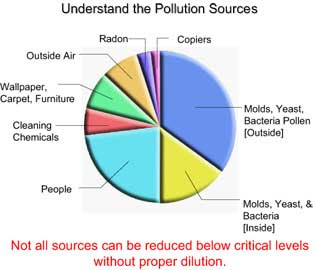
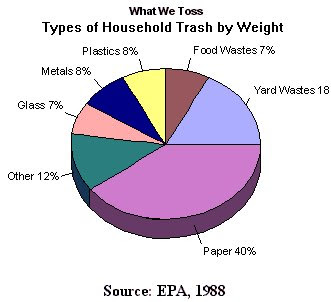
4. Here's what I found for pollution and chart CLICK THIS LINK TO SEE SPOT ON GOOGLE FEATURING THIS CHART


5. I also found this chart for air pollution CLICK THIS LINK TO SEE SPOT ON GOOGLE FEATURING THIS CHART


6. Save the chart(s) to your desktop (make sure that you copy down the information from where you retrieved the information--you need to give credit);

7. Open up a Word Document:

8. Insert the chart into the document OR BETTER YET Insert a text box into your document, then insert the picture into the text box. It can be resize inside of the text box.

9. The text boxes and charts can be re sized to meet your needs (if one chart by itself is too blurry, find several small ones to fit on the page of your handout);

10. Make sure that you create a heading (at the top) for your VA (visual aid) and that you give credit to the site/source (under each chart) from which you received the information.