Thursday, March 15, 2007

Pre-Speaking or Pre-Writing Block General Purpose, Specific Purpose, Audience Analysis Statement

FOR YOUR CONVENIENCE THE INFORMATION ASSOCIATED IN THIS BLOG ENTRY IS AVAILABLE BY CLICKING ON THE FOLLOWING LINK LISTED BELOW. ONCE YOU HIT THE LINK, YOU CAN EASILY PRINT THIS INFORMATION FOR YOUR USE:

http://docs.google.com/View?docid=dmg4wrs_14dw7fg9

The Pre-speaking Block:
Complete Before You Begin Constructing Your Message/Speech
Whenever we communicate—whether it be through speaking or writing--we do so in real time for a real purpose and for a real audience. Prior to this communication, we need to consider our purpose and that audience. This pre-speaking/prewriting block is intended to assist us in developing and constructing a strong message.

The Prespeaking Block is intended to help you focus what content and how the content should be arranged for your speeches. As a result, you know how to build your speech once you've considered these important elements.

GENERAL PURPOSE: to+_________________
(one word)

(possible examples: to inform, to persuade, to convince, to teach, to introduce, to demonstrate, to motivate, to inspire)

SPECIFIC PURPOSE: I will ______________ you that
(gp)
_________________________________________________ SO THAT THE
(subject and opinion of subject=thesis base)

AUDIENCE WILL______________________________________________.
(desired audience action or thought=actuation)

I will convince (GP verb) the audience that year round school is a bad idea (thesis base) so that the audience will attend the next school board meeting and help me oppose the idea and sign my petition against it (actuation).
I will motivate (GP verb) the audience to purchase the amazing and inexpensive new Zingmaster 3000 (thesis base) so that the audience will buy one or consider buying one (actuation).
I will inform (GP verb) the audience that school pride at Lewis Central needs to be improved (thesis base) so that the audience will show more school spirit at all school events (actuation).
I will inspire (GP verb) the audience to spend their extra time in the worthwhile activity of volunteerism (thesis base) so that the audience will look for a worthwhile charitable organization to donate his/her time (acutation).
AUDIENCE ANALYSIS STATEMENT: Several (at least three) sentences that analyze your audience and predict your success or failure in accomplishing your goal. Predict what the audience thinks of the subject and how they will react to the speech and/or your opinion of the speech.

(1) What does this audience think of this topic;
(2) How will the audience react to the information in my speech;
(3) How is it that I will accomplish my GP & my SP
(4) What might get in the way of me accomplishing my goals;
(5) What prejudices, biases, filters or previous experiences might get in the way of the audience agreeing with me.
I believe that this audience believes that school spirit is pretty good at Lewis Central High School. However, when I share examples with them that demonstrate the behaviors of students at LC during concerts, plays and some athletic events that they will understand that they should support the students who try to represent our school with pride. Some students who show great school spirit can find some value in this speech by having an influence on their friends. Students who are unattached to our school in terms of competitions, performances and pep rallies need to understand that these activities are a positive reflection on all of us. Hopefully, after hearing about the time and commitment that their fellow students demonstrate in these activities they will be inspired to demonstrate more school spirit.
I believe that this audience believes that year-round school is a bad idea because they really don't understand the idea. By informing students that year round school actually has as many days off as our current calendar, students might reconsider their opinion. I also think that the research that I share with them will prove to them that year-round school will improve their learning, their skills and make them more competitivie for scholarships, boost their ACT scores and improve retention The major prejudice that students have with this topic is that they enjoy the long break at summer. However, several breaks during the school year will be really appealing to some of them. Getting them to reconsider their opinion on this topic is really what I'm out to achieve.

THESIS STATEMENT:

This (morning, afternoon, evening) I will _______________ you that
general purpose

______________________________________________by _________________-ing
subject & opinion of subject (keep it short—bumper sticker”ish”)

(1)__________________________________;
(2)__________________________________;
(3)__________________________________;
(4)__________________________________.
preview of your main points—mini subject and opinion

Monday, February 19, 2007

English 10B Vocabulary: Unit 1 SAT/ACT Words

1.1 ALOOF (uh LOOF) distant, reserved in manner; uninvolved
Memory Link: Snowball, the cat, was so ALOOF when guests came she hid on the ROOF.

Most everyone thought Theodore ALOOF when actually he was only very shy.

Nothing ruins a fine dinner at a good restaurant like an ALOOF waiter who makes the entire experience uncomfortable.

At the wedding reception, the bride's relatives were very ALOOF, hardly speaking to the groom's guests and family.


1.2 AUSTERE (aw STEER) stern, as in manner; without excess, unadorned, severly simple and plain
Memory Link: An AUSTERE STEER is no fun at a party.

Jill's father was AUSTERE, rarely smiled and was always stern with her about having dates with boys he didn't know.

The AUSTERITY of life in the village was understandable. Many were jobless and evidence of poverty was everywhere.

Her home was AUSTERELY decorated, very plain furniture without frills and only items that were necessary.


1.3 BULWARK (BULL wurk) a defensive wall; something serving as a principle defense.
Memory Link: BULLS WORK building a BULWARK.


Quebec City is the only city in North America with a BULWARK built entirely around it.

The budget for national defense is an economic burden for all taxpayers, but we must never forget our armed services are the BULLWARK of defense for the nation.

Our mother was a BULWARK against bad times; no matter how bad things became, she always wore a smile and had a cheerful word.

1.4 CACOPHONY (kuh KAFH uh uee) harsh sounds
Memory Link: A CACOPHONY of COUGHING.

A CACOPHONY isn't noise alone, it is disturbing noise such as when people shout all at once.

Gene thinks all rock music is a CACOPHONY to be avoided whenever possible.

An unpleasant CACOPHONY of sound was produced as the orchestra tuned their instruments. But once they began to play together the sounds become euphonious.


1.5 CEREBRAL (suh REE brul) of or relating to the brain; an intellectual person
Memory Link: Eat your CEREAL so you'll grow up and be CEREBRAL like your father.

CEREBRAL for a football player, the wily Kansas quarterback rarely called a play that wasn't well planned and thought out.

Dr.Clark was too CEREBRAL to be a boy scout leader. Instead of saying "pitch your tents over by the cliff," he would confuse everyone with his big words and say, "construct the canvas shelters in the proximity of the promontory.


1.6 CONNOISSEUR (kahn uh sur) an expert, particularly in matters of art and taste.
Memory Link: The KING OF the SEWER is a CONNOISSEUR of garbage.


My uncle is a CONNOISSEUR of fine wines.

Art dealer, Jorge Guizar, is a CONNOISSEUR of Mexican art of the 19th century.

When it came to coins, Jerry proclaimed he was a CONNOISSEUR, because he had collected them all his life.


1.7 FORBEAR (for BAYR) to refrain from; to abstain; to be patient or tolerant
Memory Link: Please FORBEAER feeding the FOR BEARS.


To FORBEAR your opinion on any controversia matter until yyou have first heard all the facts is generally the wisest course of action.

Jonathan said his motto was to never FORBEAR a good party for another time when you can have one today.

Henry FORBORE his decision to close the store, deciding to wait until after the Christmas season.


1.8 INCONGRUOUS (in KAHN grew us) not appropriate, unsuited to the surroundings; not fitting in
Memory Link: The new Alaskkan senator's presence IN CONGRESS was INCONGRUOUS.

Ed appeared INCONGRUOUS wearing his tuxedo on an old-fashioned hayride.

The INCONGRUITY with Joseph's chosen career was that he had a Ph.D. in chemistry, but preferred to work as a mullet fisherman.

INCONGRUOUSLY, Dianne spent several days a week at the library, even though she professed that she didn't like to read.

1.9 LAMENT (la MINT) to express sorrow or regret; to mourn
Memory Link: We LAMENT that Joe got buried in CEMENT.


The song, "Cowboy's LAMENT," is a ballad about the lonely life of those who drive cattle for a living.

The nation LAMENTS the passing of the President while at the same time celebrating his achievements while in office.

It is LAMENTABLE that Rosecoe quit college in his sophomore year; his professors considered him the brightest engineering student in his class.


1.10 LANGUISH (LANG gwish) to become weak or feeble; sag with loss of strength
Memory Link: A FISH on LAND will quickly LANGUISH.


An outdoorsman all his life, Mr. Franklin quickly LANGUISHED in his job as a night watchman.

It was so hot in the theater, Charlotte soon began to LANGUISH.

(To LANGUISH is to be LANGUID.) The fish in the aquarium hardly stirred, moving LANGUIDLY when they moved at all.

Monday, February 12, 2007

Required Persuasive Speech Visual Aid

TO MAKE YOUR REQUIRED VISUAL AID

(IF YOU WOULD LIKE ME TO MAKE COPIES FOR YOU, PLEASE EITHER EMAIL THEM TO ME THE NIGHT BEFORE YOUR SPEECH or BRING THEM IN BEFORE SCHOOL ON THE DAY YOU SPEAK)


1. Go to GOOGLE (CLICK HERE FOR A QUICK LINK) or some other search engine with images;

2. In the search area: type in your subject (or a similar key word) "Your Subject AND CHART" (i.e. I typed in pollution and chart);

3. Locate a chart that related to your speech/topic--make sure that it fits nicely with your topic and your speech;

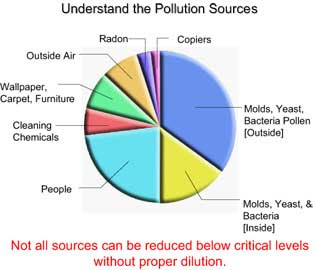
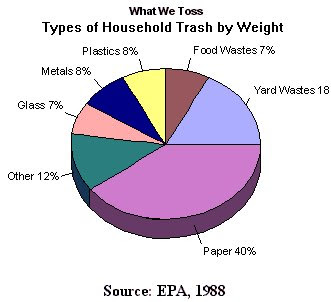
4. Here's what I found for pollution and chart CLICK THIS LINK TO SEE SPOT ON GOOGLE FEATURING THIS CHART


5. I also found this chart for air pollution CLICK THIS LINK TO SEE SPOT ON GOOGLE FEATURING THIS CHART


6. Save the chart(s) to your desktop (make sure that you copy down the information from where you retrieved the information--you need to give credit);

7. Open up a Word Document:

8. Insert the chart into the document OR BETTER YET Insert a text box into your document, then insert the picture into the text box. It can be resize inside of the text box.

9. The text boxes and charts can be re sized to meet your needs (if one chart by itself is too blurry, find several small ones to fit on the page of your handout);

10. Make sure that you create a heading (at the top) for your VA (visual aid) and that you give credit to the site/source (under each chart) from which you received the information.

Sample Works Cited Format

Here's a sample of what a Work's Cited page should look like for your paper or speech. There are other entries on the cite to answer this question.

CLICK HERE TO GO DIRECTLY TO THE SAMPLE WORK'S CITED SITE THAT PROVIDED THIS INFORMATION

You can cut and paste that information into a Word Document and then enter your information.

If you don't know how to do a Work's Cited entry, go to

(1) CITATION MACHINE or SON OF CITATION MACHINE. Click here to go to this site that will help you create an MLA Work's Cited Entry.

(2) Once there, click on MLA (Modern Language Association). DO NOT CHOOSE APA or CHICAGO. Click here to take you directly to the MLA portion of the site

(3) Choose the type of entry (on the right: electronic, print, etc.), then enter your information. When you hit the SUBMIT BUTTON, the cite will show you what your entry should look like. Cut and paste that into your Word Document.


MLA Work Cited for this Post

Darling, Charles. "A Sample Works Cited Page." A Guide for Writing Research Papers Based on Modern Language Association (MLA) Documentation. CAPITAL COMMUNITY COLLEGE. 11 Feb 2007 .


CLICK HERE to go directly to the Capital Community College Website for "An Introduction to MLA Research Techniques."

Sunday, February 11, 2007

Julius Ceasar Project: A Creative Multi-Media, Music Video with Scenes from the Film

FROM THE STUDENT CREATOR: "This is a video I made using scenes from the Julius Caesar movie, and using the song "Through Glass" by Stone Sour. I am quite proud of how this video came out. Its kind of a sad video, in a way. It's about two friends, one of whom dies. That's a sad ending. (I tried to make some sort of linear storyline to go with the project but it didn't go over all that well. Anyways, enjoy my little video tribute to Julius Caesar.

Saturday, February 10, 2007

Julius Caesar Enrichment: Study These Words to Prepare for the ACT/SAT

ACT I

servile
barren
countenance
torrent
infirmity
blunt
portentous

ACT II

taper
spurn
base
augmented
redress
insurrection
visage
affability
imminent
constancy

ACT III

firmament
apprehensive
valiant
beseech
malice
plebians
censure
legacy
orator

ACT IV

chastisement
choleric
repose
apparition
rash
nimbleness
contaminate
bait
covetous

ACT V

cur
misconduct
bestow
legions
vile
disconsolate
entrails
bondage
tarry

Friday, February 9, 2007

Julius Caesar: Writing Prompts/Homework

Shakespeare's Julius Caesar Study Guide
Homework Questions


Directions: The following questions will be assigned for homework after each act has been read in class and discussed in study groups. Each question will require at least three complete sentences. Write the answers on a separate sheet of paper. Make sure you head your loose leaf paper with the proper act number.

Act I

1. In scene 3 Cassius says of Caesar: "I know he would not be a wolf/But that he sees the Romans are but sheep." Explain what he means.
2. Scene 3 describes many strange happenings in Rome. Why are such events appropriate to the action of the play at this moment?
3. What kind of person is Casca?

Act II

1. What are Brutus' reasons for deciding that it is right to assassinate Caesar?
2. What picture does Shakespeare give us of Brutus' marriage?
3. What does Caesar's habit of referring to himself in the third person tell us about him? (For example, he says, "Shall Caesar send a lie?")
4. What evidence is there in this act that shows both Caesar and Brutus can be influenced by flattery?

Act III

1. Explain how Antony is able to work the crowd up into a frenzy with his speech?
2. What impression does Shakespeare give of the crowd's character in this act?

Act IV

1. How does Brutus react to Portia's death? What do we learn about him from his reaction?

Act V


1. What is said and done in Act V that supports the comment: Brutus' and Cassius' defeat is revenge for Caesar's murder?

Friday, January 5, 2007

Improvisation Exam

Improvisation Summative Assessment Preparation &
Final Project Selection

We are at a transitional point in the course. We will be finishing our unit on Improvisation. We have already completed two units: one on theatre games & group cohesion and another unit on dramatic criticism using Goethe's standards for evaluation.

Prop Improv Story Workshop

Students picked up the prop that they were "buzzed out" with for the Whose Line Is It Anyway version of Prop Improv that we performed as a large group. Students were asked to remember the property story that they developed during the class period following that exercise.

Students were then put into pairs to workshop this exercise for a portion of our summative assessment. Dating Game will be one-third of the Improv Final; Prop Story will make up another one-third of the Improv Final; and Freeze Play will comprise the remaing one-third of the final. Students then have at least three performances that comprise their Improvisation Final which is worth 100 points.

Step 1: Modeling the Process

Mr. McLaughlin and the class brainstormed how the pewter mug might generate a character. If used as a cup: a pirate, an Octoberfest participant, a medieval noble, etc. We also brainstormed how the prop might be used as another object: a trumpet for a musician, a hearing horn for an old person, a telescope for an explorer.

Then, we discussed what story that prop might have in relationship to the given characters:

Pirate: used during a pirate party causing him to fall overboard, encountering a shark
Old Person: a gift from ungrateful children who sought an inheritance
Musician: the horn that he/she used to play for a "command performance" for the king/queeen.

Step 2: Working in Small Groups: Guided Practice

Students then worked with partners to brainstorm a list of "real" and "possible" interpretations of that prop and generated a list of characters (that could be physicalized and vocalized) and stories that center around that prop.

Step 3: Review of Evaluation Criteria: Teaching & Modeling

Students then were reminded of how we evaluate improvised performances:

Vocalization: vocal pallette, essence creation, prosodic modification, modeling, imitation
Physicalization: movement dynamics, foot manipulation, physicalization/body centers
Script-Writing: character introduction/exposition, storytelling/rising action, conflict-centered action.

Students were shown that they must stand with their back to the partner and upon the "signal" from the teacher to assume character and turn towards their partner in character to their partner. Mr. McLaughlin modeled with with a hunch-backed, slumped over, old person.

Step 4: Guided Small Group Practice

Students then made a decsion on character, vocalization, physicalization and story. They assumed the character with their back to the audience, turned in and practiced their story for :90 seconds.

Step 5: Self Evaluation and Peer Evaluation

After the performance, each performer "predicted" how Mr. McLaughlin would evaluate him/her on each of the criteria. The student estimated whether they would receive and "up" or a "down" from me in vocalization, physicalization and script writing.

The performer's partner then shared his/her estimation of how Mr. McLaughlin would evaluate the performance. Students were asked to be honest.

Step 6: Repeat Steps 4 & 5 for Another Performer

Step 7: Repeat Steps 2-5 for the "Third Peformer" in Odd Groups & Repeat Steps 2-5 for a Second Performace in "Even" Groups

Choosing Your Final Performance Option &
Guidelines for Finding the Right Piece for You

Students were reminded of the final performance requirements that were discussed on January 03, 2007. Students were asked to make a preliminary decision as to which of the options that he/she would choose. Most students chose to be involved in a scene.

Mr. McLaughlin shared some of the additional criteria for dress/costumes, properties, sets for each of the options.

Students were given resources to help them find a piece:

(1) Go onto the internet and enter key word "monologue" and a wide-range of sites will make themselves available;

(2) Check the following sites for good and time-appropriate monologues: http://www.whysanity.net and http://www.monologuearchive.com

(3) Use the books on reserve in Mr. McLaughlin's office and mark selected scenes with a "Post It Note" with your name on it.

(4) If you don't have internet, come to Mr. McLaughlin's office with a pass at anytime before school, after school, during school and work in there to find a piece. Or use the internet at the Council Bluffs Public Library.

(5) Use your The Stage and the School Book's tan section to find monologues or scenes.

(6) Use scenes and monologues found in Mr. McLaughlin's brown lateral file by the entrance of the Drama Room.

(7) If all else fails--which it shouldn't--see Mr. McLaughlin before the deadline for selection a piece.


Wednesday, January 3, 2007

Five Paragraph Essay Style Sheet

FOR YOUR CONVENIENCE THE INFORMATION ASSOCIATED IN THIS BLOG ENTRY IS AVAILABLE BY CLICKING ON THE FOLLOWING LINK LISTED BELOW. HIT THE LINK AND PRINT TO ACCESS THIS INFORMATION:

http://docs.google.com/View?docid=dmg4wrs_15ch63n9

STYLE SHEET FOR ENGLISH 10A or 10B FIVE PARAGRAPH ESSAY

MLA Heading

Student First Name Student Last Name

Teacher or Professor

Course, Assigment

00 Month, 2015

Format and Craft Your Writing Carefully

Use Standard English, avoid informal language

Double space

Use 12 pt. Times New Roman font

Always write in complete sentences unless it is for effect

Avoid run-on sentences or fragments

Write in third person - he, she, it

Avoid using “I” unless the essay is of a highly personal nature

Use past tense unless it is for effect

Indent all paragraphs

Proofread by reading out loud to check for easily corrected errors

Run spell check

Use blue and black ink for formal assignments

If you make an error, draw one line through the word and use a ^, then write the correction above the carat

If you have errors, make corrections and reprint

Common Problems with Usage

Subject-verb agreement -use they were, not they was, I saw, not I seen

Write out numbers from one to ten, otherwise use the number - 11

Use appropriate abbreviations (there is no abbreviation for you)

Avoid incorrect phrases - use all of a sudden, not all of the sudden

Avoid dropping the letter d -supposed to, not suppose to

Use should have not should of

Spell out because, not cuz or cause

Use homonyms correctly i.e. there shows direction- over there, their shows possession – their
car, they’re means they are – they are going to the movie

Watch for words that join together and become one word i.e. himself, not him self

Avoid contractions

Essay Construction/Organization & Structure

Paragraph 1: Set up the essay with a “hook,” “lead,” or “attention getter.” Introduce the topic in a thesis statement. A thesis statement gives an overview of the essay and the main point or positions you will prove or discuss in your essay. Use a transition statement to set up your next paragraph.

Paragraphs 2, 3, and 4: Discuss at least three different aspects of your topic – one per paragraph. Use explainers, support, evidence (examples, details, facts, incidents, comparisons, statistics, anecdotes, expert opinions, inferences, personal experiences and/or reasons) to prove your points. Organize your information logically. Use transitions to move from one paragraph to the next.

Paragraph 5: In a craftful way let the reader know that the end is near. Conclude your essay by restating in other words the important points you made in your essay. Make sure that you restate your overall thesis with strength. Leave the reader with a sense of finality by designing a clincher or a closing that extends the reader’s thinking.

© Thomas V. McLaughlin Jr., Mary Langille, Laurie Nielsen, 2006--for permission to use this document for purposes other than classes taken with these teachers, please contact them at Lewis Central High School, 3504 Harry Langdon Blvd., Council Bluffs, IA 51503

Drama I Trimester Performance Final

You will be using all of the formative skills that we've learned in class so far: improvisation, vocal characterization, physical characterization, public solitude, storytelling, chunking, memorizing for your final performanc project. We will draw numbers for these performances. You will perform for the entire class. This assignment is required to pass the course.

OPTION 1—Monologues—two contrasting monologues (one comedy, one drama) that are :90 seconds each. One good fit, one stretch. 3:00 total performance time.

OPTION 2—Scenes—two or three actors (no more than this), balanced scene, comedy or tragedy. 5:30 total performance time.

Some sites for you to consider are:

Colin's Movie Monologue Page at http://www.whysanity.net

Sample Monologue from Colin's Movie Monologue Page
Dead Poets Societywritten by Tom Schulman
Mr. Keating: In my class, you will learn to think for yourselves again. You will learn to savor words and languages. No matter what anybody tells you, words and ideas can change the world. I see that look in Mr Pitts' eyes like 19th century literature has nothing to do with going to business school or medical school, right? Maybe. You may agree and think yes, we should study our Mr. Pritcher and learn our rhyme and meter and go quietly about the business of achieving other ambitions. Well, I have a secret for you. Huddle Up...Huddle UP! We don't read and write poetry because it's cute. We read and write poetry because we are members of the human race. And the human race is filled with passion. Medicine, law, business these are all noble pursuits necessary to sustain life. But poetry, beauty, romance, and love; these are what we stay alive for. To quote from Whitman "Oh me, Oh life of the question of these recurring. of the endless trains of the faithless of cities filled with the foolish. What good amid these? Oh me, Oh life." "Answer...that you are here and life exists....You are here. Life exists, and identity. The powerful play goes on and you may contribute a verse." The powerful play goes on and you may contribute a verse. What will your verse be?

The Monologue Archive at http://www.monologuearchive.com

Saturday, December 2, 2006

Evaluating Print Sources

Evaluating Print Sources

Quantity

Enough resources are needed to:

Support your argument

Include a variety of viewpoints and materials

Diversity

Variety is necessary. Include many different resources.

Primary Sources

Contemporary accounts of an event and original documents

Examples: letters, diaries, audio-recordings of speeches, newspaper articles
Secondary Resources

Retrospective sources based on primary resources; include scientific or scholarly analysis
Examples: books, articles, editorials, reviews, scientific studies

Date of Publication

When was the source published? Remember the Information Timetable. Depending on the topic of research different materials from different time periods will be used.

Current Events ResearchUse resources that are recent and reflect current attitudes.

Historical ResearchUse a variety of resources from different time periods including both Primary and Secondary resources.

Quality and Reliability

When choosing your resources, the most difficult task is determining their quality and reliability.
This is particularly problematic when a source is found through the Internet. Some factors to think about when assessing the quality and reliability of a publication are:

What is the tone?

Who is the intended audience?

What is the purpose of the publication?

What assumptions does the author make?

What are the bases of the author's conclusions?

Does the author agree or disagree with other authors of the subject?

Does the content agree with what you know or have learned about the issue?

To help determine this, it might also help to look over the source's documentation and read some reviews of the source.

Additional Resources

Does the source provide other leads?

Documentation (i.e., footnotes and bibliography)

Provides additional resources

Substantiates the author's research

Cramer, Steven. "Part 6: Evaluating Sources." Guide to Library Research. 22 January 2001. Duke Unisversity. 15 Nov 2006 . http://www.lib.duke.edu/libguide/evaluating.htm#quantity

Friday, December 1, 2006

Evaluating Web Pages

Evaluating Web Pages for Credibility

Authority

Who wrote the page?

Look for the author's name near the top or the bottom of the page. If you can't find a name, look for a copyright credit (©) or link to an organization.

What are the author's credentials?

Look for biographical information or the author's affiliations (university department, organization, corporate title, etc.).

Can you verify the author's credentials? Could the credentials be made up?

Anyone who has visited a chat room knows that people don't always identify themselves accurately.

Did the author include contact information?

Look for an email link, address, or phone number for the author. A responsible author should give you the means to contact him/her.

Whose web site is this?What organization is sponsoring the web page?

Look at the domain (.com, .edu, .org, etc.).

Look for an "about this site" link.

Also look for a tilde (~) in the URL, which usually identifies a personal directory on a web site.

Be careful of a web page that has a tilde in its URL.

Internet service provider sites (AOL, Mindspring, MSN, etc.) and online community sites (GeoCities, Tripod, Angelfire, etc.) feature personal pages. Be careful of web pages from those sites, too.

Example of the need to verifythe author's credentials

Example of the need to considerwho's sponsoring the site

Purpose/intended audience

What is the purpose of the page? Why did the author create it?

The purpose could be advertising, advocacy, news, entertainment, opinion, fandom, scholarship, satire, etc.

Some pages have more than one purpose. For example, http://www.dowjones.com/ provides free business information but also encourages you to subscribe to the Wall Street Journal or other Dow Jones products.

Who is the target audience?

academic researchers? kids? buyers of competitors' products? trekkers? political extremists?

Look at reading level of the page: is it easy to read or challenging? Does it assume previous knowledge of the subject?

Consider the design of the web page: are there banner ads and animated GIF's, or does the page present a lot of text with little decoration?

Example of the need to consider the intended audience, especially if you are researching a topic like ethnic stereotypes in Star Wars: The Phantom Menace.

Current?

Is there a date at the top or bottom of the page?

But note: a recent date doesn't necessarily mean the information is current. The content might be years out of date even if the given date is recent. (The last update of the page might have consisted of someone changing an email address or fixing a typo.)

Is the information up-to-date?

This takes a little more time to determine. Compare the information on the web page to information available through other sources. Broken links are one measure of an out-of-date page.

In general, information for science, technology, and business ages quickly. Information in the humanities and social sciences ages less quickly. However, old information can still be perfectly valid.

Example of the need tocheck for currency

Objectivity v. bias

Is the author being objective or biased?

Biased information is not necessarily "bad", but you must take the bias into account when interpreting or using the information given.

Look at the facts the author provides, and the facts the author doesn't provide.

Are the facts accurately and completely cited?

Is the author fair, balanced, and moderate in his or her views, or is the author overly emotional or extreme?

Based on the author's authority, try to identify any conflict of interest.

Determine if the advertising is clearly separated from the objective information on the page.

Example of the blurring of advertising and objective information

Support

Does the author support the information he or she uses?

Look for links or citations to sources. Some academic web pages include bibliographies.

Is the support respectable?

Does the page cite well-known sources or authorities?

Does the page cite a variety of sources?

Do other pages on the same topic cite some of the same sources?

The web page in question should have a mix of internal links (links to web pages on the same site or by the same author) and external links (links to other sources or experts).

If a web page makes it hard for you to check the support, be suspicious.

Example of the need to check the cited sources

Is the web the right place to do your research?

Some kinds of information are not available on the free web. Also, some kinds of information are easier to find using library resources.

Examples:

literary criticism (begin with a literature database like the MLA Bibliography or the Literature Resource Center.)

industry analysis (a business database like S&P NetAdvantage makes it simple to find detailed, authoritative reports on industries.)

public opinion polls (while there are some good sources for polls on the web for free, the best way to begin is using the polls and public opinion section of Lexis-Nexis Academic Universe.)

So don't overlook library resources, whether online (like databases and ejournals) or in print.

Cramer, Steven. "Part 6: Evaluating Sources, Web Pages." Guide to Library Research. 14 July 2003. Duke Unisversity. 1 Nov 2006 . http://www.lib.duke.edu/libguide/evaluating_web.htm.

Searching for Information

SEARCHING FOR INFORMATION
Dewey Decimal System

Most of the libraries use the Dewey system. Dewey is a hierarchical classification system that divides humanity's knowledge, ideas, and artistic creations into ten major categories spanning a range from 000 to 999.

The hierarchical nature of the Dewey system makes browsing books possible.

A book's call number includes more than a Dewey number, so write down the complete call number of the books you want to find.


Online Catalog

The Duke Online Catalog is your gateway to finding books (as well as journals, electronic resources, videos, and more).

You can search the catalog in six ways: Author, Title, Subject Heading, Keyword, Call Number, or ISBN and other numbers.

The yellow boxes on the catalog's various search screens provide basic information and sample searches.


Online Catalog Records

After performing a search that finds some materials, you will see a short record containing basic information.

To see the full record, select the link. The full record provides more information and more search choices.

For example, you can select an author's name to see all the books Duke has by that author. You call also select a subject heading to see all the materials Duke has on that subject.


Library of Congress Subject Headings

When you search the online catalog by subject, you must use a Library of Congress Subject Heading (LCSH) or a Medical Subject Heading (MeSH). The library assigns subject headings to all items listed in the online catalog. This makes it easy to find books on the same topics or related topics.

Subject headings are listed in a five-volume manual called simply Library of Congress Subject Headings ("the big red books"). Sometimes you can guess the appropriate subject headings, but it's wise to check the manual to be sure. Reference librarians can help you, too.

Library of Congress Subject Headings
A Subject Search Shortcut

Using Other Libraries

Links are available on the Catalogs page.

Found something that Duke doesn't have? Fill out an interlibrary loan request form. Perkins Library's Interlibrary Loan department will borrow materials for you from other libraries.
Another possibility is using the other university libraries in the Triangle area: University of North Carolina at Chapel Hill, North Carolina State University (Raleigh), and North Carolina Central University (Durham). You can use your Duke Card to check out books at these three universities yourself. The Catalogs page provides easy access to their online catalogs.
Cramer, Steven. "Part 5: Searching for Information." Guide to Library Research. 06 March 2001. Duke Unisversity. 1 December 2006 http://www.lib.duke.edu/libguide/searching.htm.

Saturday, November 25, 2006

Selecting Resources: Information Timeline

Selecting Appropriate Resources: Timeline & Credibility

The World Wide Web--Most Immediate, Publishing Hourly

Time Frame: Immediately - several years after the event
Audience: General public - scholars, researchers, and students
Authorship: General public - scholars, researchers, and students
Content: General overview - detailed analysis
Length: One screen with few links - many screens with several links

EXAMPLES:

CNN Interactive (http://www.cnn.com/)
JAMA HIV/AIDS Information Center (http://www.ama-assn.org/special/hiv/hivhome.htm)Entertainment Weekly (http://www.ew.com/ew)


Why consult a world wide web page?
Immediate coverage of an event
Access to information that is not available in print format
Sometimes more detailed coverage
Sometimes additional resources from footnotes and bibliography
Statistics, Graphs & Charts may be available


How to Find World Wide Web Pages

Evaluating Web-Pages for Credibility

http://www.lib.berkeley.edu/TeachingLib/Guides/Internet/Evaluate.html

Evaluating Online Resources Notebook by UIS Professor Ray Schroeder
Evaluating Web Resources by Jan Alexander and Marsha Ann Tate, Wolfgram Memorial Library, Widener University
How to Evaluate a Web Page from Colorado State University.
Teaching Undergrads Web Evaluation by Jim Kapoun, in College & Research Libraries News (July/August 1998)
Thinking Critically about World Wide Web Resources by Esther Grassian, UCLA College Library

Newspapers--Relatively Immediate, Publishing Daily

Time Frame: One day - one week after the event
Audience: General Public
Authorship: Reporters
Content: Summary or overview of the event;basic factual information coveringwho, what, where, when, and how
Length: Brief

EXAMPLES:

The New York Times;
The Washington Post;
The Raleigh News and Observer

Why consult a newspaper?
Statistical information
Local news coverage
Immediate news coverage
Photographs
Editorials

How to Find Newspapers

Popular Magazines--Immediate, In-Depth, Publishing Weekly

Time Frame: 1 week - 1 month after the event
Audience: General Public
Authorship: Journalists
Content: General Overview; summary of the eventcovering who, what, where, when, howand starting to analyze why
Length: 1-5 pages

EXAMPLES:

Time;
Newsweek;
National Geographic

Why consult a popular magazine?
Statistical information
General overview of a current event; more detailed analysis than a newspaper
Public opinion
Photographs


How to Find Magazines

Determining the difference between popular magazines vs. scholarly journals.

Scholarly Journals: Intermittent, Monthly, Quarterly

Time Frame: Several months - years after the event
Audience: Scholars, researchers, and students
Authorship: Scholars and researchers
Content: Research; theories; study and experimental results;and analysis
Length: Many pages (usually over 5 pages)

EXAMPLES:
Journal of Child Development;
Journal of the American Medical Association;
American Quarterly, etc.

Why consult a scholarly journal?
More in depth examination of a subject
Additional resources from footnotes and
bibliography
Statistics
Graphs

How to Find Scholarly Journals

Determining the difference between popular magazines vs. scholarly journals.

Reference Sources: Encyclopedias, Handbooks

Time Frame: Several months - years after the event
Audience: General Public- specialists
Authorship: Scholars and specialists
Content: General Overview
Length: Varies among sources

EXAMPLES:
Dictionary of Art;
Encyclopedia of the American West;American Decades; etc.

Why consult a reference resource?
Background information
Overview
Statistics


Additional resources - bibliographies

How to Find Reference Resources and Background Information

Books--Published Yearly, Extended Time After Event

Time Frame: At least 1 year - several years after the event
Audience: General public - scholars, researchers, and students
Authorship: Scholars and researchers
Content: Detailed analysis; sometimes a compilation ofarticles from several scholars
Length: Numerous pages - often over 100 pages

EXAMPLES:
Negotiating Difference;The Press of Ideas;
Women, Art and Society

Why consult a book?
Detailed analysis of a subject
Multiple viewpoints often portrayed - especially in a compilation of articles
Additional resources found in footnotes and
bibliography

How to Find Books

Cramer, Steven. "Part 4: Selecting Resources." Guide to Library Research. 14 July 2003. Duke University. 25 Nov 2006 http://www.lib.duke.edu/libguide/selecting.htm.

Evaluating Your Sources for Credibility

http://library.uis.edu/findinfo/evaluate.html
Critically Analyzing Information Sources (Cornell University)
Evaluating Web Pages: Techniques to Apply & Questions to Ask (UC Berkeley)
Evaluating Web Resources (Jan Alexander and Marsha Ann Tate, Widener University)
Evaluating Web Sites (The Ohio State University)
The Good, the Bad, & the Ugly: or, Why It's a Good Idea to Evaluation Web Sources (Susan E. Beck, New Mexico State University)

Further Reading

Ciolek, T.M. (1996). The six quests for the electronic grail: Current approaches to information quality in WWW resources. Retrieved 30 October 2004 from http://www.ciolek.com/PAPERS/six-quests1996.html

Standler, R.B. (2004, May 25). Evaluating credibility of information on the Internet. Retrieved 30 October 2004 from http://www.rbs0.com/credible.pdf

Stanford Persuasive Technology Lab. (2004). The web credibility project. Retrieved 30 October 2004 from http://credibility.stanford.edu/

Tillman, H.N. (2003, March). Evaluating quality on the net. Retrieved 30 October 2004 from http://www.hopetillman.com/findqual.html

Saturday, November 18, 2006

DAILY ORAL LANGUAGE: ACT Preparation--Grammar, Usage & Mechanics & Rhetorical Skills Quiz 3

Daily Oral Language Assignments

Each day of Mr. McLaughlin's English 10B Class will begin with a short "sponge" activity. On some days we will begin with the ACT preparation assignments like the ones listed in this entry.

On other days we will be working with ACT/SAT Vocabulary words. For your convenience & for your study, these are being posted here for your convenience and to study for our in class quizzes.

Your learning of this material will be covered on our quizzes. We will have a quiz each two weeks.


The following Daily Oral Language Lessons will be scheduled following break.

ACT Test Preparation, Passage II.1 Day 11.doc

ACT Test Preparation, Passage II.2 Day 12.doc

ACT Test Preparation, Passage II.3 Day 13.doc

ACT Test Preparation, Passage II.4 Day 14.doc

ACT Test Preparation, Passage II.5 Day 15.doc

ACT Test Preparation, Passage II.6 Day 16.doc

ACT Test Preparation, Passage II.7 Day 17.doc

ACT Test Preparation, Passage II.8 Day 18.doc

ACT Test Preparation, Passage II.9 Day 19.doc

ACT Test Preparation, Passage II.10 Day 20.doc

Friday, November 17, 2006

Refining a Topic

REFINING A TOPIC

Introduction Narrowing a Topic Broadening a Topic

INTRODUCTION

Once you have found some background information, you can refine your broad research topic into a narrow, focused topic. The sooner you can develop a broad subject into a focused topic, the sooner you can shape your research into a finished paper.

On the other hand, if your subject is too focused or detailed, you may have a hard time finding enough sources to write an acceptable paper. In this case, to need to broaden your topic.
If you need assistance refining your topic, please consult any reference librarian/librarian.

NARROWING A TOPIC

A topic that covers too much material is a common problem for students. Depending on your interests, a general topic can be focused in many ways. For example, if you want to do a paper on government funding of the arts, consider the following questions:

What do you already know about this subject?

Is there a specific time period you want to cover?

Is there a geographic region or country on which you would like to focus?

Is there a particular aspect of this topic that interests you? For example, public policy

implications, historical influence, sociological aspects, psychological angles, specific groups or individuals involved in the topic, etc.

Topic Narrowing:

General Topic
Government funding of the arts

Time Span
1930s

Place
USA

Event or Aspects
New Deal, painting


Narrowed Topic Sentence
Federal funding of painters through New Deal programs and the Works Progress
Administration.

Boolean Searching

The logical operators AND and NOT can be used in database searches to narrow a search statement. For more information, consult Electronic Searching.

Using the Online Catalog to Narrow a Topic:

Sometimes the online catalog can give you some ideas for narrowing a topic. Many subject headings in the catalog are broken down into subheadings that define geographical locations, material types, or specific aspects of a topic. Some subject headings also have Search also under or See also notes and links that identify other related or narrower subjects.

Starting a subject heading search with a general topic may be a good way to discover related subject headings and more narrow elements of a topic.

Subdivisions of a subject headings are also useful for identifying more specific elements
of a topic.

BROADENING A TOPIC
Topics that are too narrow are fairly simple to fix. Think of parallel and broader associations for your subject to find a broader topic that will be easier to research. Sometimes a topic may be too new and sources to your research questions may not yet exist.

For example, if you want to do a paper on the effect of deforestation on Colombia's long-term ability to feed its citizens, consider the following questions:

Could you examine other countries or regions in addition to Colombia?

Could you think more broadly about this topic? Give thought to wider topics like agriculture and sustainable development.

Who are the key players in this topic? The government? Citizens? International organizations?

What other issues are involved in this topic? Such as, how can natural resources be allocated most economically to sustain the populace of Colombia?


Topic Broadening:


Specific Topic

What is the effect of deforestation on Columbia’s long-term ability to feed its citizens?

Alternative Focus

Agriculture, sustainable development

Alternative Place

South America

Alternative Person or Group

United Nations and its subgroups

Alternative Event or Aspect

Birth Control

Broadened Topic Sentence

How can the United Nations encourage South American countries to employ sustainable development practices?

Boolean Searching

The logical operator OR can be used in online database searches to broaden a search statement. For more information, consult Electronic Searching.

Using the Online Catalog to Broaden a Topic:

The online catalog may suggest other terms that are related to a subject heading. These terms show up when you click on "about" after a subject heading. This link will take you to a scope note that defines what kinds of materials are cataloged under that heading. Often links to broader terms can be found within these scope notes.

This term represents a broader aspect of the original search term.

Cramer, Steven. "Refining a Topic." Guide to Library Research. 1 November 2002. Duke University. 17 Nov 2006 http://www.lib.duke.edu/libguide/refining.htm.

Wednesday, November 15, 2006

Finding Background Information: Beginning Research

FINDING BACKGROUND INFORMATION

General Encyclopedias
Specialized/Subject Specific Encyclopedias
Specialized/Subject Specific Dictionaries
Almanacs
Handbooks
Periodical
Articles from Full-Text Databases

Biographical Sources
Other Sources via the Catalog
How to Use These Sources Most Effectively

A good way to begin your research is to locate and read short articles that will give you a broad overview of a topic. You can find these articles in a variety of reference materials. Also, these resources often provide bibliographies -- lists of books and articles that will allow you to discover what else is available on a subject.

GENERAL ENCYCLOPEDIAS

Since they are designed to cover all branches of knowledge, general encyclopedias are likely to have some information on every topic. They are often good sources to consult first, since they introduce the main concepts about a subject and suggest other sources that may be helpful.
Most libraries have a variety of general encyclopedias in the 030 call number area. If your topic involves international issues and you can read another language, consider looking at one of the many encyclopedias published in other countries.

Finding general encyclopedias requires only that you do a subject heading search for "encyclopedias and dictionaries." However, to make sure you are retrieving records for the most up-to-date publications, it is wise to limit your search to items published in this decade. For example:

Here are some examples of titles you will retrieve from this search:

The World Book Encyclopedia.
Lilly Reference 031 W927, 2000

The New Encyclopaedia Britannica (also available online).
Perkins Reference 031 N532, 1998

SPECIALIZED/SUBJECT-SPECIFIC ENCYCLOPEDIAS

Specialized or subject-specific encyclopedias provide more detailed articles written by experts in a field. There are hundreds of specialized encyclopedias. Bibliographies in these sources tend to be more comprehensive than bibliographies in general encyclopedias.
To locate encyclopedias for specific subjects, do a subject heading search in the online catalog for your subject followed by the word "encyclopedias." For example, if you wanted to find encyclopedias for psychology, your search would look like this:

From this search you can expect to find the following source among the several records this search retrieves:

Encyclopedia of Psychology.
Perkins Reference 150.3 E56, 2000

Here are other examples of subject-specific encyclopedias:

McGraw-Hill Encyclopedia of Science & Technology.
Perkins Reference 503 M147, 1997
Lilly Reference 503 M147, 1997

Encyclopaedia Judaica.
Perkins Reference 296.03 E56
Divinity Reference 296.03 E56

SPECIALIZED/SUBJECT-SPECIFIC DICTIONARIES

Technical and discipline-specific definitions not listed in general dictionaries may be available in subject-specific dictionaries. Definitions in these types of dictionaries are usually more detailed than those found in standard dictionaries; many subject-specific dictionaries resemble encyclopedias more than traditional dictionaries. Illustrations and bibliographic references are common.

To find dictionaries for special subjects, try a subject heading search for your subject followed by the term "dictionaries":

This search will find sources like the following:

A Dictionary of Architecture
Lilly Reference 720.3 C975, D554, 1999

A Short Dictionary of Architecture, Including Some Common Building Terms.
Perkins Reference 720.3 W268S
Lilly Reference 720.3 W268S

International Dictionary of Architects and Architecture
Lilly 720.9 I61, 1993

ALMANACS

Almanacs are filled with up-to-date answers to all kinds of questions. Whether you are looking for basic statistics on state funding of welfare programs or recent winners of the Stanley Cup, you are likely to find the information in an almanac. They provide figures, charts, tables, and statistics.

Do a subject heading search in the online catalog for "almanacs." Limit your search to serial publications. You can then choose from geographic subdivisions, or browse "almanacs,

"American" for example.

Some good standard almanacs include:

World Almanac and Book of Facts.
Perkins Reference 317.73 W927
Lilly Ready Reference 317.73 W927A

The Time Almanac (formerly the Information Please Almanac)
Perkins Reference 317.3 I43

Whitaker's Almanack.
Perkins Reference 314.2 W478 (latest)

Next latest Lilly Reference

HANDBOOKS

Handbooks supply concise factual information like charts, formulas, tables, statistical data, and historical background. Because they are updated frequently, handbooks include information about new developments. References to additional information are usually included.

Handbooks can be found in the catalog by doing a subject heading search for your topic plus the term "handbooks."

For example, the Duke Libraries owns several physics handbooks:

The Physics Quick Reference Guide.
Vesic Reference 530 C678, P578, 1996

Handbook of Physical Quantities.
Vesic Reference 530.0212 H236, 1997

PERIODICAL ARTICLES FROM FULL-TEXT DATABASES

Sometimes articles in newspapers or general interest periodicals (Newsweek, Time, National Geographic, etc.) can provide a quick overview of a subject. Use one of the library's full text databases to find such articles.

Keep in mind that articles you find in these resources should be viewed as the beginning -- and not necessarily the end -- of your research. Searches in general periodical indexes may also provide you with an idea of what kinds of articles are being written about a subject.
For more information about locating articles in periodicals, see Finding Journal and Magazine Articles and Finding Newspaper Articles.

BIOGRAPHICAL SOURCES

Sometimes you may want to learn something about a person without having to read a full-length biography. The Duke Libraries own several biographical reference works that provide relatively brief articles about thousands of people. You can always expect to find something about the most famous people. It should also be possible to find something about fairly obscure people.
Most of the biographical reference works are cataloged by country and the subdivision "biography--dictionaries." For example, to find a source for biographies of U.S. citizens, you would do a subject heading search that looks like this:

Here is a list of some of the most useful biographical reference works. There is also a list of biographical databases.

Dictionary of American Biography [1928].
Perkins Reference 920.07 J66DLilly Reference 920 D554A

Who's Who in America.
Perkins Reference Desk 920.07 L581
Lilly Reference 920 W628AD

Dictionary of National Biography: the concise dictionary.
Perkins Reference 920.042 D554AB
Lilly Reference 920 D554NCb

Encyclopedia of World Biography.
Perkins Reference 920.003 E56, 1998

New York Times Biographical Service.
Perkins Reference q 920.02 N567
Lilly Reference 920 N567

Contemporary Authors.
Perkins Reference Book Review Index Table 928 C761A
Lilly Reference 920 C761A (also available online via Literature Resource Center)

Indexes to biographical sources are invaluable resources. The best biographical indexes are available online: Biography Reference Bank,Biography & Genealogy Master Index

OTHER SOURCES VIA THE CATALOG

You can also find background information through a keyword search of the online catalog. Search for your broad topic with keywords like companion, guide, or survey, as in this example:

This search will uncover:

Guide to the Sources of Medieval History.
Perkins Reference 940.108 C127, G946, 1978

This search will uncover:

The Oxford Companion to Philosophy.
Perkins Reference 100 O98, 1995
Lilly Reference 100 O98, 1995

In NetLibrary: http://www.netlibrary.com/

A Companion to World Philosophies.
Lilly Reference 109 C737, 1997

HOW TO USE THESE SOURCES MOST EFFECTIVELY

As you read about a subject, take note of distinctive and unique words used to describe the topic. These will be the keywords you can use to search for additional information in other sources.

To save yourself time and trouble, write down the author, title, and publication information for every source you consult. You will need this information if you need to write a bibliography or find the publication again.

Locate the publications listed in the bibliography at the end of articles. These ready-made reading lists are sources authors may have used to put their work together, and you may also find these same sources helpful for your research.

Cramer, Steven. "Part 2: Finding Background Information." Guide to Library Research. 27 July 2001. Duke Unisversity. 15 Nov 2006 . http://www.lib.duke.edu/libguide/background.htm.

Tuesday, November 14, 2006

Choosing a Topic: A Guide to Library Research

CHOOSING A TOPIC:
A GUIDE TO LIBRARY RESEARCH


What are you going to research?

Sometimes choosing a topic is the biggest hurdle in doing research. Your instructor may assign a general or specific topic, or the choice may be up to you. Knowing where to look for ideas will help you find an interesting subject.

Where can you get ideas?

Your interests, the things you have been reading, and conversations you have had in class or with others are often good sources of ideas.

Sources of background information like general encyclopedias, subject-specific encyclopedias or dictionaries, or textbooks can be sources of ideas.

Current periodicals may give you an idea of hot research topics. Look through some recent issues of journals or magazines in the Current Periodicals collection in Perkins Library.
Browsing the shelves in the library is also a good way to get an idea of topics which have intrigued authors. Consult this general browsing guide to find out where books on a general subject are shelved. Since books at Duke are shelved together by topic, once you have identified the call number of one book, you can browse for related books.

What are your information requirements?

When analyzing your assignment, you will also want to consider the type, quantity, and format of information you will need. Answering the following questions may help you organize your research:

What kind of assignment do you have to complete? (e.g., 5 minute oral presentation, 10 page paper, 50 page paper)

How much information do you need?

Is currency important?

What types of publications do you want to read? (newspaper articles, books, journal articles, diaries, trade publications, etc.)

What formats do you need? (visual, audio, printed, electronic)

Is point of view an issue? Do you need opinions?

How much time do you have?

What are the keywords that describe your topic?

Once you have identified your subject, think about questions your research might help you answer. State your topic as a question. Think about the significant terms, concepts, and keywords that describe your topic. These terms will become the key for searching catalogs, indexes, and databases for information about your subject.

Example:

How did New Deal programs influence the arts in America?

Keywords:

New Deal United States Depression Art Federal Aid to the Arts

Cramer, Steven. "Part 1: Choosing a Topic." Guide to Library Research. 27 July 2001. Duke Unisversity. 14 Nov 2006 http://www.lib.duke.edu/libguide/choosing.htm.

Saturday, October 7, 2006

An In-Depth Look at Audience Analysis

Audience Analysis as a Communication Tool

General Sites
Articles and More Specialized Sites
Bibliography

Audience analysis emphasizes the diversity of responses to a given popular culture artifact by examining as directly as possible how given audiences actually understand and use popular culture texts. Three kinds of research make up most audience research:

1) broad surveys and opinion polls (like the famous Nielsen TV ratings, but also those done by advertisers and by academic researchers) that cover a representative sample of many consumers;
2) small, representative focus groups brought in to react to and discuss a pop culture text; and
3) in-depth ethnographic participant observation of a given audience, in which, for example, a researcher actually lives with and observes the TV viewing habits of a household over a substantial period of time, or travels on the road with a rock band.
Each approach has strengths and weaknesses, and sometimes more than one approach is used as a check on the others.

Audience analysis tries to isolate variables like region, race, ethnicity, age, gender, and income in an effort to see how different social groups tend to construct different meanings for the same text. Audience analysis also includes looking at that special category of audience, fan subcultures, that have grown up around certain pop culture texts and celebrities (i.e., Britney Spears “wannabees” or the “Trekkies” devoted to Star Trek). Online fan cultures are a particularly appropriate and accessible audience research topic for an online list such as this. Thus, below I have listed a few fan links to get you started. But almost any pop culture celebrity, group, or text has a fan club of some kind, so follow your own interests, obsessions, or curiosities.

One key distinction to keep in mind is “official” or “authorized” fan sites created by the media, versus “unofficial” sites created by various fans themselves. What similarities and differences do you find between these two kinds? In what ways do the fan sites reflect the same values and interests as the corporate sites? In what ways do the fan sites show differences from or even active resistance to the values and interests projected on the corporate sites?

Another good resource for online audience analysis is sites that provide space for user reviews. The Internet Movie Database, for example, has thousands of movie reviews by ordinary folks. Samples are not statistically random, but they are often wide-ranging and with enough of them can provide important information on audience responses.

The Internet Movie Database, for example, has thousands of movie reviews by ordinary folks. Samples are not statistically random, but they are often wide-ranging and with enough of them can provide important information on audience responses.

GENERAL SITES

Audience Research. Short article by David Morely on the history and present practice of audience research by a leading scholar.

Fan Fiction. Fan fiction, writing by fans about stars, sometimes including alternative scripts, is a major emerging form. This site has links by various genres including Soaps, Music, Sci Fi, Horror, and many others, including some parody sites.

FANDATA’s Fandom Directory. A searchable or browseable compendium of fan sites from all over, on a very wide range of interests.

Internet Movie Database (IMDB). Excellent site for getting "ordinary viewer" movie reviews.

Obsessive Fans Sites. One person’s attempt to draw attention to the twisted world of the least deserving, most obsessive fan sites. Call this an anti-fan site.

Music Fan Clubs. A good starter list from Pause Records. See also the Music links page of our Web site.

reality blurred. A reality TV news digest with news on all reality TV since 2000.

RealityTVLinks.com. Reality Television Show Directory has links to fan sites, news sites and show sites for every possible reality show out there.

Soap Opera Fans. AOL member site with many links for one of the most active group of fans, those dedicated to TV soap operas.

Soap Opera Links. Good set of links from About.com

Soap Opera Network. Large commercial site on soaps.

General, random link to hundreds of fan sites listed by AltaVista

The Ultimate Band List. Search for an artist or group, and this site will provide, among other things, links to fans’ sites.

ARTICLES AND MORE SPECIALIZED SITES

Soap Operas Send Educational Messages to Global Audiences. Arvind Singhal argues for the progressive social value of soaps in an international context, especially in state-sponsored programs.

Star Trek sites. Without doubt, Star Trek wins as the most fanned program of all time. It is a natural for the cyberworld. Begin here to go where no one has gone before in terms of fan loyalty and creativity.

Fox Fights Millennium Websites. Article from E! Online about a major battle between official and unofficial websites for the TV series Millennium with links to more about the controversy. Could serve as the beginning point for a term paper topic.

Xena fan sites. Another major cult following traces this amazon without a dot com.

Whoosh! The journal of the International Association of Xena Studies. Seriously.

Watching TV Viewers. A learning module on audience analysis by media scholar David Chandler.

BIBLIOGRAPHY

[Few topics on popular culture can be adequately researched on the web alone. These reading suggestions are designed as beginning points for further offline study.]

Allen, Robert C. Speaking of Soap Operas. Chapel Hill: University of North Carolina Press, 1985.

Excellent study of the production and consumption of daytime soap operas.
Allen, Robert C., ed. Channels of Discourse Reassembled: Television and Contemporary Criticism. Chapel Hill: University of North Carolina Press, 1992.

Introduces a variety of critical approaches to popular culture (semiotics, genre analysis, ideological analysis, etc.) through essays focusing on American television.
Ang, Ien. Living Room Wars: Rethinking Media Audiences for a Postmodern World. London: Routledge, 1996.

Excellent collection of essays exploring various difficulties and possibilities in analyzing the responses of popular culture audiences.
Gamson, Joshua. Claims to Fame: Celebrity in Contemporary America. Berkeley: University of California Press, 1994.

The best book yet written on the role of pop “celebrities” in US culture, using production, textual and gender analysis.
Kellner, Douglas. Media Culture: Cultural Studies, Identity and Politics Between the Modern and the Postmodern. London; New York: Routledge, 1995.

Broad study that offers both a fully developed theoretical model and case studies ranging from Rambo to Madonna to Gulf War news coverage.
Lewis, Lisa. Gender Politics and MTV. Philadelphia: Temple University Press, 1990.

Takes an audience-ethnographic approach that sees Madonna and similar figures as empowering to girls and young women.
Pustz, Matthew. Comic Book Culture: Fanboys and True Believers. Jackson: University Press of Mississippi, 1999.

Study of contemporary comic strip fans, from the casual to the nearly pathologically devoted. The subtitle refers to the author’s distinction between mainstream “fanboys” and “true believers” devoted to alternative comix culture.
Radway, Janice. Reading the Romance: Women, Patriarchy and Popular Culture. Chapel Hill: University of North Carolina, 1991.

One of the most often cited “classics” in American Studies literature, this analysis combines production analysis, textual analysis and ethnographic audience analysis of the “romance novel” genre.

Another Bibliography on Audience Research.